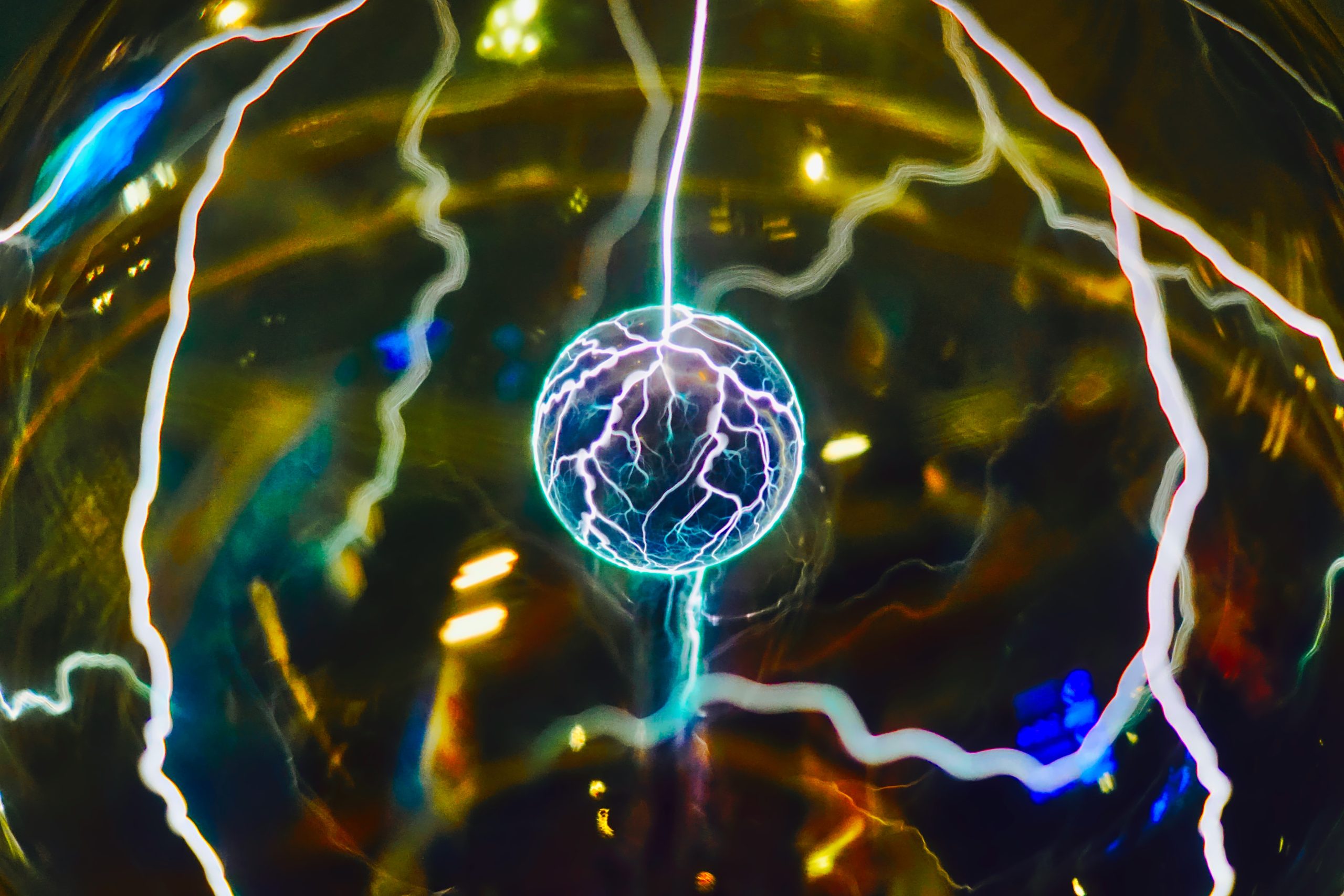
Higgs Field Multiverse Theory
Let’s begin with an uncomfortable truth that physicists don’t always say out loud.
The Higgs boson was supposed to wrap things up.
Instead, it unsettled almost everything.
When the Higgs was confirmed in 2012, it felt like a victory lap for modern physics. Decades of theory, billions of dollars, and one of the most complex machines ever built had finally paid off. The Standard Model was complete. The story had an ending.
And then physicists looked more closely.
Almost immediately, the celebration gave way to a quiet unease. Because while the Higgs existed exactly as predicted, its mass didn’t behave the way it was supposed to. It wasn’t wildly unstable. It wasn’t dragged to extreme energies. It sat calmly in a narrow, life-friendly range.
Too calmly.
That single detail has since nudged physics toward one of its most radical possibilities yet:
that our universe may not be alone.
Article-at-a-Glance (In Plain, Human Language)
- The Higgs field explains why particles have mass, but its exact value seems improbably “just right.”
- That fine-tuning raises an uncomfortable question: is our universe uniquely special, or simply one of many?
- In multiverse theories, different universes could have different Higgs values and therefore entirely different physical laws.
- We can’t observe other universes directly, but scientists are searching for indirect fingerprints in cosmic radiation and particle experiments.
- The Higgs–multiverse connection reshapes not only physics, but philosophy, forcing us to rethink chance, necessity, and our place in reality.
The Higgs Field: The Quiet Architect of Everything Solid
The Higgs field isn’t somewhere far away.
It’s here.
Every cubic nanometer of space is saturated with it. You’re immersed in it right now. And without it, nothing you recognize as “solid” would exist.
Unlike gravity or electromagnetism, the Higgs field doesn’t fluctuate between on and off. It has a stable, non-zero value everywhere in the universe. Physicists call this spontaneous symmetry breaking, but the intuition is simpler: the universe made a choice early on, and everything since has lived with the consequences.
That choice determines:
- Which particles have mass
- How heavy they are
- Whether atoms can exist at all
No Higgs field means no massive electrons.
No atoms.
No chemistry.
No stars.
No planets.
No one left to wonder why any of this exists.
That’s why the Higgs field isn’t just another component of physics. It’s the scaffolding that makes matter possible.
What the Higgs Field Actually Does (Without the Jargon)
People often say the Higgs field “gives particles mass.” That’s not wrong, but it’s incomplete.
A better way to think about it is interaction.
Some particles move through the Higgs field almost effortlessly. Others interact constantly, as if wading through thick syrup. That resistance shows up as mass.
Photons don’t interact with the Higgs field at all, which is why light is massless and fast. Top quarks interact intensely, which is why they’re astonishingly heavy. Everything else falls somewhere in between.
Those interaction strengths aren’t arbitrary details. They determine:
- Whether atoms stay intact
- Whether stars ignite
- Whether chemistry works
- Whether life has any chance at all
Which leads to the question physicists can’t shake:
Why do these values seem so perfectly calibrated?
As physicist Lisa Randall has noted, the Higgs field doesn’t just explain mass. It writes the operating system for matter itself.
The Discovery That Answered One Question and Raised Ten More
On July 4, 2012, CERN announced the discovery of the Higgs boson. The Large Hadron Collider had recreated conditions close to those just after the Big Bang, smashing protons together with extraordinary precision.

The Higgs was there.
Then came the measurement: about 125 billion electron volts.
That number landed in an awkward place. According to quantum theory, the Higgs mass should be violently unstable, pulled toward enormous energies by quantum fluctuations. Instead, it sat quietly in a narrow, life-permitting range.
This mismatch is known as the hierarchy problem, and it’s not a technical footnote. It suggests one of three possibilities:
- There’s new physics we haven’t discovered yet.
- The universe is balanced by an extraordinary coincidence.
- Or… we’re only seeing one survivable universe among many.
That third option is where the multiverse enters the conversation.
Fine-Tuning: Coincidence or Cosmic Selection?
Physicists are deeply suspicious of coincidences. Especially cosmic ones.
The Higgs field isn’t alone in its fine-tuning. Many fundamental constants appear balanced on a razor’s edge:
- Dark energy is tuned to 1 part in 10¹²⁰
- The Higgs field to about 1 part in 10¹⁷
- Gravity is unimaginably weaker than electromagnetism
- Nuclear forces are tuned just right to allow both hydrogen and heavier elements
Change any of these slightly, and the universe becomes sterile.
So why this universe?
The multiverse offers a starkly simple answer:
because this is one of the rare universes where observers can exist to ask the question.
Bubble Universes and Other Versions of Reality
In many multiverse models, our universe is just one “bubble” formed during a violent episode of cosmic inflation. Other bubbles formed elsewhere, each freezing into different physical laws.
Different Higgs fields.
Different particle masses.
Different chemistry.
Or none at all.
Some universes might be empty radiation. Others might collapse instantly. A tiny fraction fall into a narrow “Goldilocks” range where complexity can arise.
We’re in one of those—not because it’s typical, but because it’s survivable.
String Theory’s Vast Cosmic Landscape
String theory pushes this idea even further.
If its mathematics is right, there may be something like 10⁵⁰⁰ possible vacuum states, each corresponding to a different universe with different Higgs properties. That number isn’t poetic exaggeration. It’s a conservative estimate.
In this view, our universe isn’t special because it exists.
It’s special because it persists.
Science or Philosophy? The Honest Tension
Here’s the tension physicists openly wrestle with.
We can’t visit other universes.
We can’t send signals to them.
Direct proof may be impossible.
But physics has been here before. Black holes were once unobservable curiosities. Atoms were once theoretical conveniences. Gravitational waves were once thought undetectable.
Today, scientists search for indirect clues:
- Subtle patterns in the cosmic microwave background
- Gravitational wave signatures from early inflation
- Ultra-precise measurements of the Higgs field
- Evidence that our vacuum state is metastable
None of this proves the multiverse outright. But taken together, it forms a growing web of consistency that physicists can’t easily ignore.
The Philosophical Shockwave
The Higgs–multiverse connection doesn’t just challenge physics. It challenges us.

It suggests:
- Our universe may not be unique
- Our laws may not be fundamental
- “Why these constants?” may be the wrong question
Instead, we’re forced to ask:
given many possibilities, where could observers exist at all?
That’s the anthropic principle—not as mysticism, but as selection bias written into reality itself.
As Max Tegmark has put it, the miracle isn’t that the universe fits us. It’s that we only ever notice the universes that do.
Meaning, God, and the Multiverse
Contrary to popular belief, the multiverse doesn’t neatly settle questions of meaning or belief.
Some see it as removing the need for design.
Others see it as expanding the scope of creation.
Many theologians argue the two ideas aren’t in conflict at all.
INTERACT WITH THE AUTHOR
GET UPDATES, EXCLUSIVE GIFTS & SPECIAL OFFERS FOR FREE WITH OUR NEWSLETTER!
Do it now while it’s free! Click this link and be in the know about this blockbuster book and current conversations: https://revelationequation.com/newsletter/