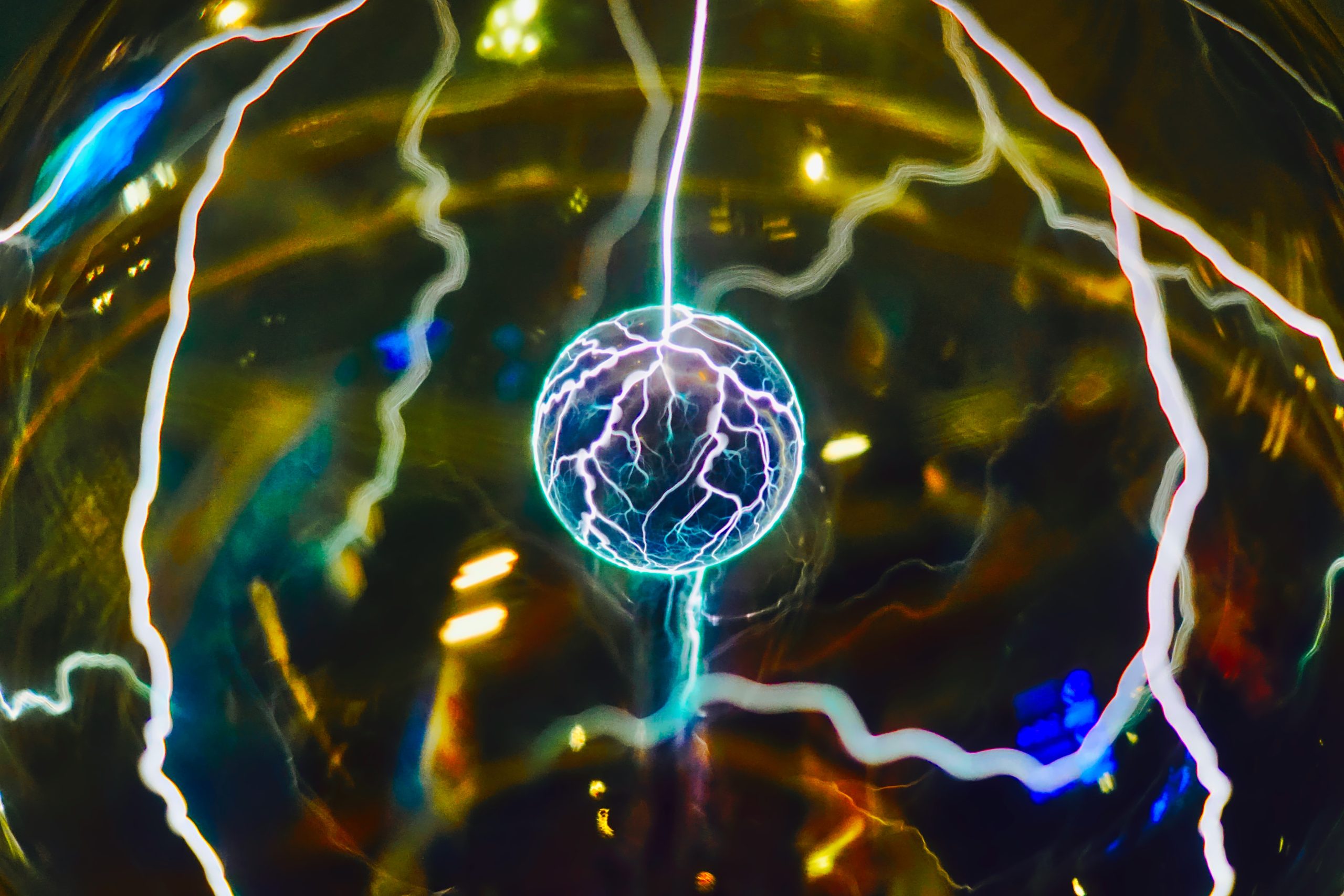
Quantum theory, also known as quantum mechanics or quantum physics, is one of the most important and fascinating ideas in modern science. It describes the behavior of the tiniest things in the universe, such as atoms and subatomic particles. Quantum theory has revolutionized our understanding of reality, leading to groundbreaking technologies like lasers, semiconductors, and quantum computers.
But what exactly is quantum theory definition? Let’s explore its key concepts in a way that’s easy to grasp.
What Is Quantum Theory?
At its core, quantum theory is the branch of physics that explains the behavior of matter and energy on extremely small scales—on the level of atoms and particles smaller than atoms. Unlike classical physics, which deals with larger objects like planets and cars, quantum theory reveals that the microscopic world behaves in strange and counterintuitive ways.
Here’s a simple quantum theory definition:
- Quantum theory is the study of the smallest building blocks of the universe and the rules that govern their behavior.
Key Principles of Quantum Theory
1. Particles and Waves
In classical physics, things like baseballs are clearly particles, while things like sound are clearly waves. Quantum theory shows that tiny particles, such as electrons and photons, can behave both as particles and waves. This is called wave-particle duality.
- Example: A photon (a particle of light) can act like a wave when it moves through space, creating interference patterns. But when you observe it, it behaves like a particle.
2. Quantization
The word “quantum” means a discrete amount. In quantum theory, certain properties, like energy, can only exist in specific, fixed amounts called “quanta.”
- Example: Electrons in an atom can only occupy certain energy levels, like steps on a ladder. They can’t exist between these steps.
3. Superposition
One of the strangest aspects of quantum theory is that particles can exist in multiple states at once. This is called superposition.

- Example: An electron can be in two places simultaneously—until it’s observed, at which point it “chooses” one location.
4. Entanglement
Particles can become entangled, meaning their properties are linked no matter how far apart they are. If you change the state of one particle, the other changes instantly, even if it’s on the other side of the universe. This is known as quantum entanglement.
- Example: If two particles are entangled and you measure the spin of one particle, the spin of the other particle will be determined instantly, regardless of distance.
5. Uncertainty Principle
The Heisenberg Uncertainty Principle states that you can’t precisely measure certain pairs of properties of a particle, like its position and momentum, at the same time.
- Example: The more accurately you measure a particle’s position, the less accurately you can know its momentum.
The Birth of Quantum Theory
Quantum theory emerged in the early 20th century when scientists discovered that classical physics couldn’t explain certain phenomena at small scales. Key milestones include:
- Max Planck (1900): Proposed that energy is quantized, laying the foundation of quantum theory.
- Albert Einstein (1905): Explained the photoelectric effect, showing that light behaves as particles called photons.
- Niels Bohr (1913): Developed a model of the atom where electrons occupy discrete energy levels.
- Werner Heisenberg and Erwin Schrödinger (1920s): Developed the mathematical framework of quantum mechanics.
Why Quantum Theory Matters
Quantum theory is more than just a set of strange rules for tiny particles. It has far-reaching implications for our understanding of the universe and has led to revolutionary technologies.
1. Explains the Nature of Reality
Quantum theory reveals that the universe is not as deterministic or predictable as classical physics suggests. Instead, it’s governed by probabilities and uncertainties, making reality more complex and mysterious.
2. Enables Modern Technology
Many technologies rely on quantum principles, including:

- Lasers: Used in everything from DVD players to medical devices.
- Semiconductors: The foundation of computers and smartphones.
- MRI Scanners: Rely on quantum principles to create detailed images of the human body.
- Quantum Computers: A new kind of computer that uses quantum bits (qubits) to solve problems faster than traditional computers.
3. Inspires Future Discoveries
Quantum theory has opened the door to new fields of research, such as quantum cryptography (for secure communication) and quantum teleportation (transmitting information instantaneously).
Challenges and Interpretations
Quantum theory works incredibly well in practice, but it raises philosophical questions and challenges our intuition about reality. Different interpretations of quantum mechanics attempt to explain its strange behavior:
- Copenhagen Interpretation: A particle’s state isn’t real until it’s observed.
- Many-Worlds Interpretation: Every possible outcome of a quantum event happens in its own parallel universe.
- Pilot Wave Theory: Particles are guided by a wave that determines their behavior.
No single interpretation has been universally accepted, which keeps quantum theory an exciting and evolving field.
Common Misconceptions About Quantum Theory
- “Quantum mechanics is only for scientists.” While the math can be challenging, the core ideas of quantum theory are fascinating and accessible to anyone with curiosity.
- “Quantum mechanics defies logic.” It doesn’t defy logic—it follows its own set of rules. These rules are just very different from what we experience in the macroscopic world.
“Quantum theory proves free will or spirituality.” While quantum theory raises interesting philosophical questions, it doesn’t directly support ideas like free will or spiritual beliefs.
The Future of Quantum Theory
Quantum theory is a cornerstone of modern science, but it’s not the end of the story. Physicists are working to:
- Unify Quantum Mechanics and Gravity: Combining quantum theory with Einstein’s theory of gravity is one of the biggest challenges in physics.
- Explore Quantum Gravity: Theories like string theory and loop quantum gravity aim to explain how quantum mechanics and gravity work together.
- Harness Quantum Technology: Advances in quantum computing, cryptography, and materials science promise to transform industries.
Conclusion
Quantum theory is the foundation of our understanding of the microscopic universe. It describes a world that is unpredictable, probabilistic, and deeply interconnected. From superposition to entanglement, quantum mechanics reveals that reality is far stranger than it appears at first glance.

Beyond its scientific significance, quantum theory challenges us to think differently about the universe and our place within it. As we continue to explore its mysteries, quantum theory reminds us of the power of human curiosity and the boundless potential of discovery.