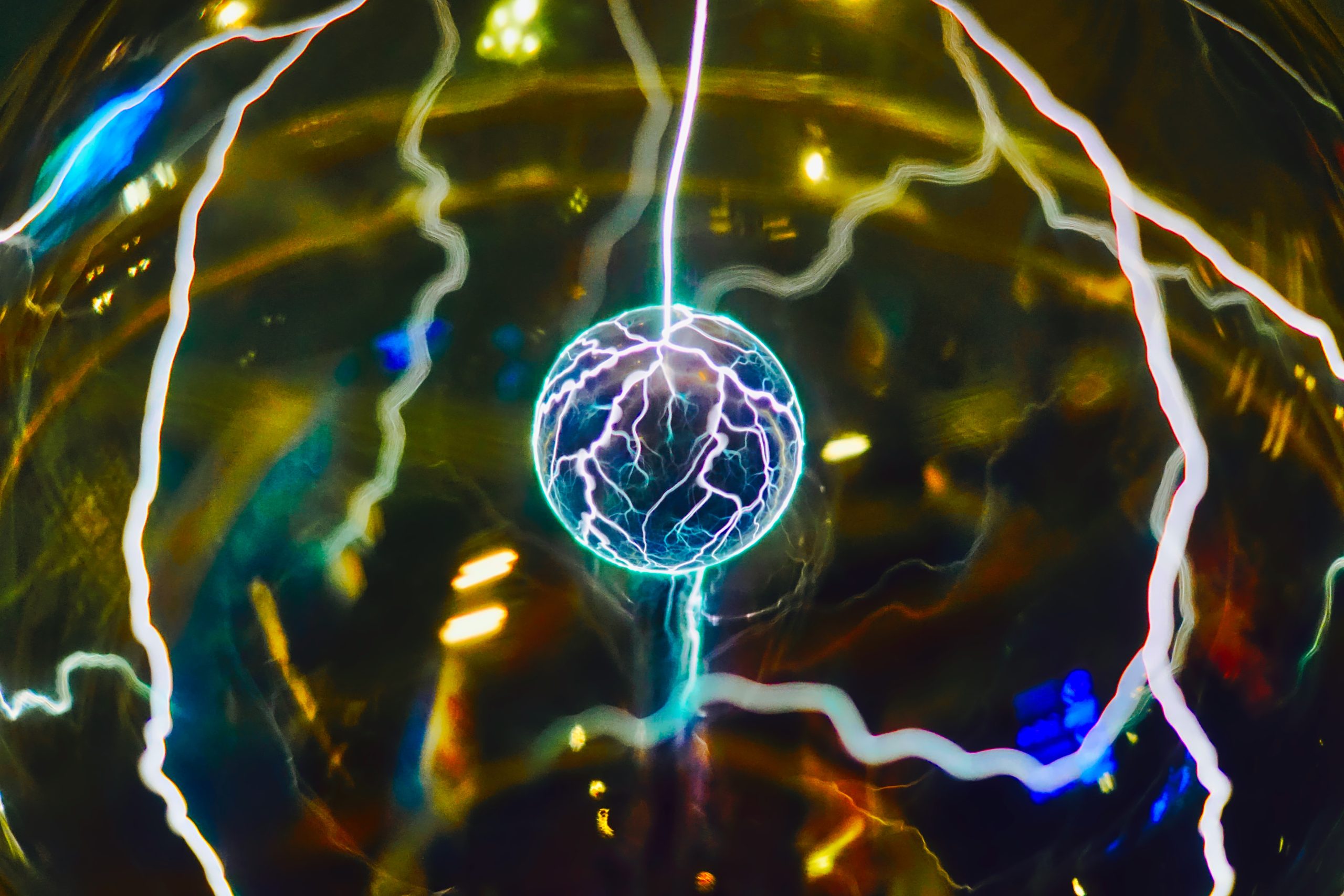
Simulation Hypothesis: Key Insights to Sit With
- The Simulation Hypothesis suggests that everything we know—our memories, physics, even time—might be part of a massive, highly sophisticated computer simulation.
- With advancements in artificial intelligence, it’s becoming increasingly plausible that simulated realities could one day be indistinguishable from the “real” world.
- Some strange quirks in quantum physics—like particles behaving differently when observed—mirror how information is processed in digital systems.
- The parallel worlds theory suggests our universe might be just one in a vast network of realities.
- If any of this is true, it doesn’t just change how we think about science—it changes how we understand ourselves.

A Stranger Question Than It First Appears
Imagine waking up one day and realizing that the world around you—your family, your history, even the feeling of sun on your face—exists not in a physical universe, but in a digital one. That the rules you’ve trusted your whole life are part of an elaborate simulation, built by something (or someone) far more advanced than us.
Wild, right?
But here’s the thing: that idea—the Simulation Hypothesis—is being taken seriously by some of the world’s brightest minds. Not because it sounds cool (though it does), but because our own technology is starting to blur the line between simulation and reality.
And if we’re already creating virtual worlds today, what’s to say someone—or something—hasn’t already created ours?
What Does It Mean to Live in a Simulation?
At its core, the Simulation Hypothesis suggests that what we perceive as reality might just be one level of a multi-layered, artificially rendered universe.
This idea picked up steam when philosopher Nick Bostrom proposed a simple but unsettling logic: if a future civilization could create incredibly realistic simulated worlds—and if they wanted to—then statistically, we’re far more likely to be inside one than living in the original, base reality.
Everything we experience—time, gravity, consciousness—could be part of a masterfully coded environment.
And that begs the question: Who—or what—coded it?
The Science That Keeps Nudging Us Toward “Maybe”
At first glance, this all feels like science fiction. But then comes quantum physics—and things start to get weird.
For starters, quantum indeterminacy tells us that subatomic particles exist in multiple states until they’re observed. Reality, in some strange sense, seems to wait for our attention before collapsing into form.
It’s eerily similar to how video games render only what’s on screen to conserve resources—processing detail only when the player looks.
Even the constant speed of light has been likened by some physicists to a kind of “universal refresh rate.” Whether those comparisons are perfect or not, they’re compelling. And they make us wonder if the architecture of our universe has more in common with code than we once thought.
What If This Is All Just… Code?
To understand the Simulation Hypothesis, try picturing a game world—like a sophisticated VR universe. Only this one is so real, so immersive, that the characters inside it don’t know they’re code.
Now imagine you’re one of those characters.
In a simulated reality, everything—from molecules to galaxies—would follow encoded rules. Physical laws might just be the logic of the program. And consciousness? It could be part of the code too… or something deeper trying to experience itself through the code.
Suddenly, questions like “Do we have free will?” or “What is the soul?” take on very different textures.

AI and the Path to Simulated Worlds
Artificial intelligence plays a starring role in this conversation. As AI becomes increasingly capable of generating lifelike interactions, conversations, and environments, we’re already approaching the early edges of reality-simulation.
Virtual reality and augmented reality are no longer futuristic—they’re here. And they’re getting more convincing.
It’s not hard to imagine that within a few generations, simulations might be so vivid, so complex, that they’re indistinguishable from “real life.”
And once we get there… how do we know we haven’t already?
Quantum Weirdness That Feels a Lot Like Code
Let’s go back to quantum mechanics. The deeper scientists peer into the subatomic world, the more reality starts behaving like… information.
- Superposition: A particle existing in all possible states at once, until observed.
- Entanglement: Two particles instantly connected, even across vast distances.
- The observer effect: Observation itself changing what’s observed.
If that doesn’t sound like the behavior of a responsive, dynamic program… what does?
Parallel Worlds: The Bigger Picture
Closely related to the Simulation Hypothesis is the theory of parallel worlds. In simple terms: there may be many universes. Some like ours, some vastly different.
Quantum theory’s “many-worlds” interpretation says that every time a quantum decision happens (say, a particle spins left or right), both outcomes exist—in separate, branching realities.
If that’s true, then there could be countless versions of you—living out different choices, in slightly different simulations.
And suddenly, “reality” doesn’t just shift… it multiplies.
So What Does This Mean for Us?
If we’re living in a simulation—or if our universe is one of many—it forces us to wrestle with some big, tender questions:
- What does it mean to be real?
- Does free will still matter if we’re following a program?
- Who or what is running this… and why?
There’s something equal parts awe-inspiring and unnerving about these questions. They don’t take away meaning. If anything, they make our choices, our feelings, our experiences feel even more precious.
Because even in a simulation, love still feels like love. Grief still hurts. Wonder still stirs.
Clues We Might Be in a Simulation
This is where speculation meets curiosity. Some argue we’re seeing subtle evidence all around us:
- The uncanny precision of physical constants.
- The way math seems to describe everything—almost too perfectly.
- Glitches in perception. Synchronicities. That strange “something’s off” feeling you can’t quite name.
Even information theory (the study of how data works) suggests the universe might be built from information. Like a codebase, with reality as its interface.

The Philosophical and Ethical Tangle
Let’s say we are inside a simulation.
Does that make our lives any less valuable?
Does love mean less if we’re code? Does art?
Most philosophers would argue no. Meaning doesn’t require origin. It requires awareness.
In fact, understanding we might be simulated doesn’t flatten us—it elevates us. It forces us to look inward. To ask bigger questions. To choose how we live, even if someone’s watching.
Looking Ahead
As science pushes further into AI, quantum computing, and consciousness studies, we may inch closer to answers.
But it’s possible the Simulation Hypothesis isn’t a problem to solve—maybe it’s a mirror.
A way to reflect on who we are, how we live, and how much we still don’t know.
Final Thoughts: What If It Doesn’t Matter?
Maybe we are in a simulation.
Maybe we aren’t.
But maybe that’s not the point.
Maybe what matters is how we show up in whatever this is.
With curiosity. With compassion. With the humility to admit we don’t have it all figured out—and maybe never will.
Because in the end, whether the universe is code or chaos or something in between, we still get to choose how we move through it.
And that’s a kind of freedom no simulation can take away.
INTERACT WITH THE AUTHOR
GET UPDATES, EXCLUSIVE GIFTS & SPECIAL OFFERS FOR FREE WITH OUR NEWSLETTER!
Do it now while it’s free! Click this link and be in the know about this blockbuster book and current conversations: https://revelationequation.com/newsletter/